Quick Start
Note
This documentation is for v3 and v2.5 PiFinders running software 2.0.0 or above. If you need docs for a previous version please Click here
Congratulations on getting your hands on a PiFinder™! Whether you’ve built it from scratch, or ordered a completed model from BBLabs, you’re on your way to a whole new level of accuracy and ease while observing the night sky.
This Quick Start guide aims to get you out and observing with most everything you need. For more depth and information about non observing functions, checkout the full User Guide
We’ll walk you through getting your PiFinder up and running for the first time, give you step-by-step instructions for your first night out, show you how to change your settings, and get you confident in understanding how PiFinder works.
PiFinder uses its camera to take continuous pictures of the stars it sees, compares those stars to its database, and then tells you exactly where you’re pointed. It does that process, called “plate solving”, constantly, so it always knows where you’re aimed. It also uses an accelerometer (much like most modern mobile phones) to feel when you move the scope, and these two processes help tell it where you are, and the PiFinder in turn can tell you where you need to go.
PiFinder was created by software engineer and amateur astronomer Richard Wolff-Jacobson, who realized he could use his engineering and coding experience to create a brand new way to get more out of his time at the telescope. He saw that plate solving technology could be handled by the famous Raspberry Pi single-board computer and a simple camera. The software and rig he developed will turn your telescope into an accurate guide through the night sky.
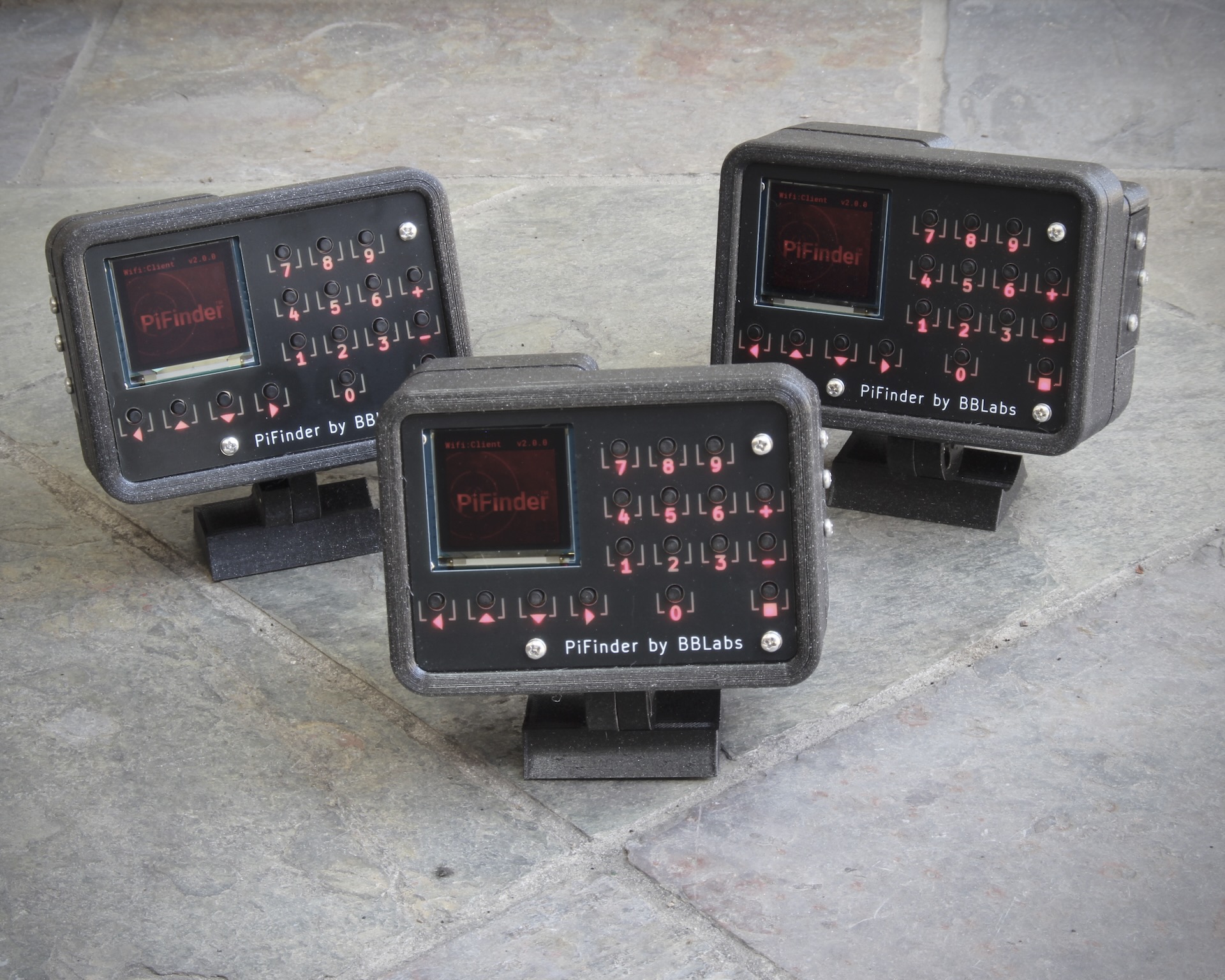
Unboxing
The PiFinder comes fully assembled and ready to use. The keypad and screen are the primary way you’ll interact with the PiFinder, choosing what to look for, getting Push-To guidance and logging objects.

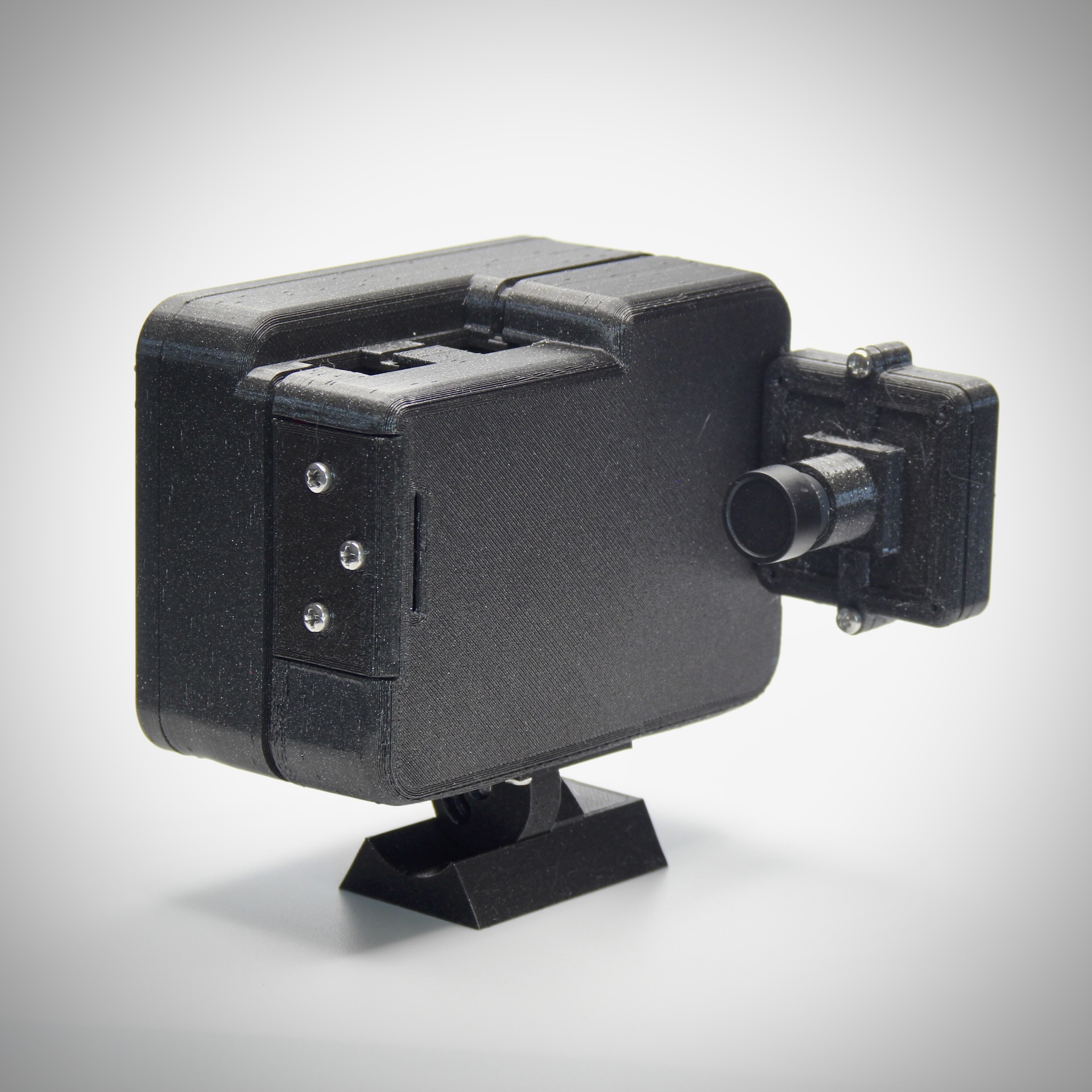
Depending on the configuration of your PiFinder the camera may be facing a different direction or be located in a different spot. This is to make sure the camera sees the sky while the keypad and screen are comfortable for an observer to reach on any type of scope.
Powering the PiFinder
If you purchased or built your PiFinder with the optional internal battery, you’ll need to charge the battery before first use. Plug a USB-C charging cable into the port on the top of the PiFinder, closest to the back of the case, as indicated below with an arrow. The charging indicator will glow blue when charging and switch to green when complete.
For battery powered units, the power switch is the small white switch located on top of the PiFinder above the screen highlighted with a box below. While facing the screen slide it right to turn it on, left to turn it off.
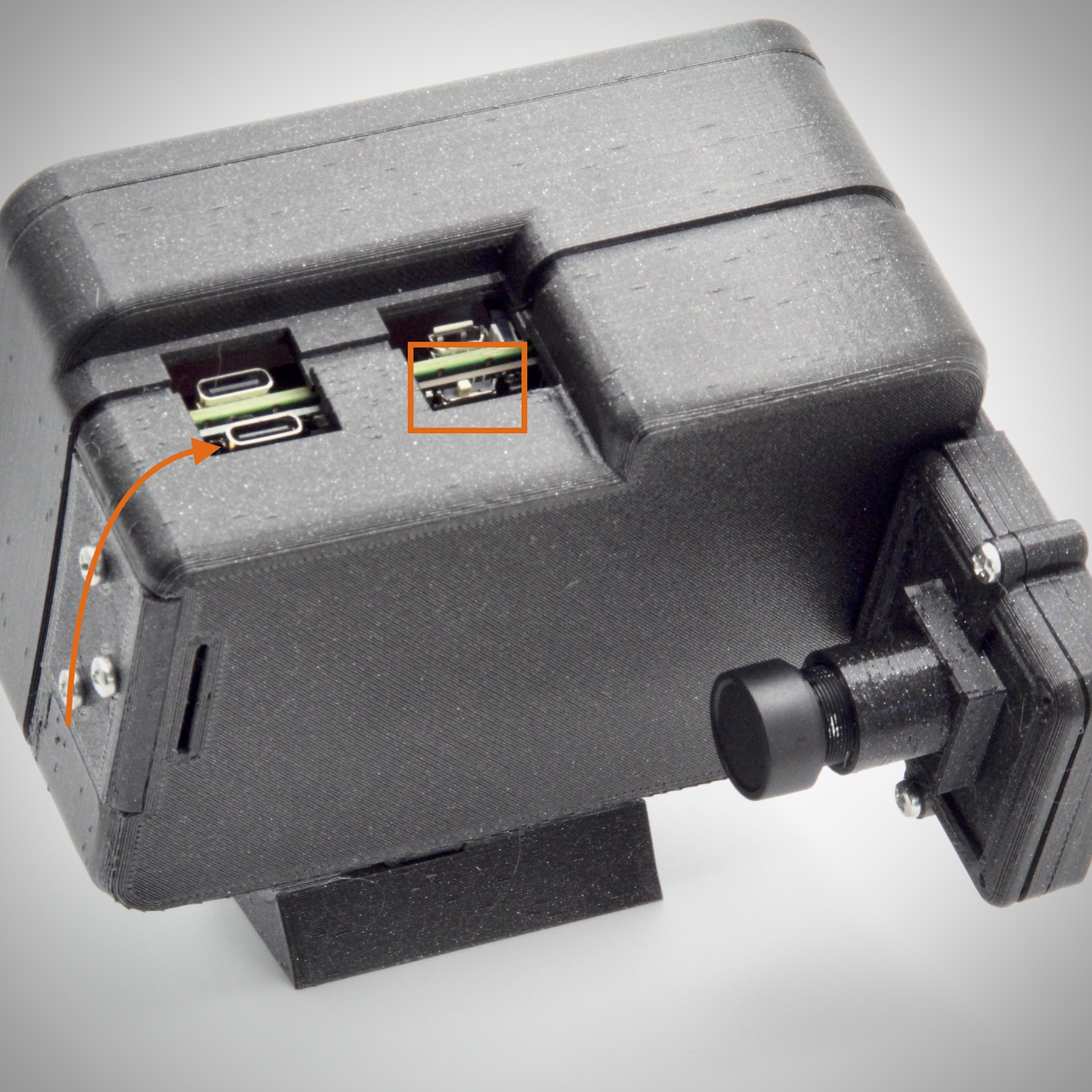
If you use an external power source, you can use either USB-C port to power the unit. The USB-C port on the Raspberry Pi which is closest to the keypad (there will be only one if you don’t have the internal battery) will power the unit, but not charge the internal battery. You can use the regular charging connector to both power the unit and charge the battery from external power if you turn the white power switch to the ‘On’ position.
Note that when you turn on your PiFinder for the first time, it will take a minute to start up. During intial startup, the welcome screen will come and go as the PiFinder restarts but subsequent power-on’s will be much quicker.
Once the PiFinder is powered on, an welcome image will appear on the screen. You’ll then see some information about the loading process and finally the Main Menu will appear.
Using the PiFinder
The PiFinder features a scolling menu with the active option highlighted in the middle of the screen.
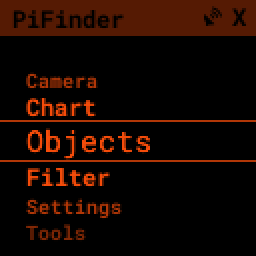
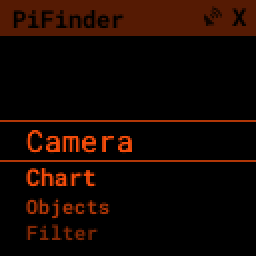
All the features of the PiFinder are available through this menu by scrolling, selecting options or moving to new menu screens.
The UP and DOWN arrows will scroll the current menu
The RIGHT arrow will activate the current option; selecting it or moving to another menu
The LEFT arrow will take you back to the previous menu or screen
Holding LEFT for more than one second will always take you back to the TOP of the menus
Some menus, like the catalog selection, allow you to check on an off multiple options using the RIGHT arrow
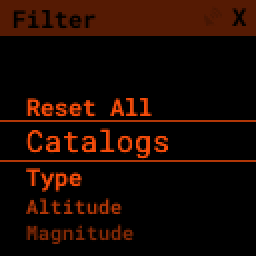
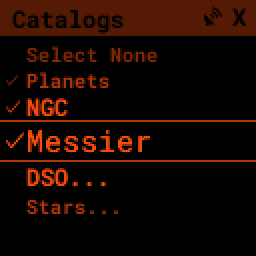
There are menu items which take you to specific functions, like a star chart showing where your telescope is currently pointing.
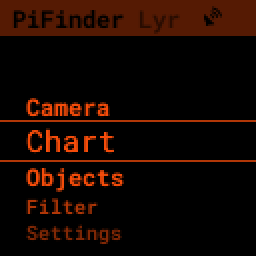
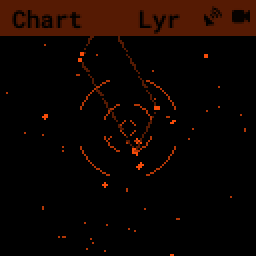
The LEFT arrow will always take you back to the previous menu or screen.
Many screens will use the number keys along with +,**-, and **SQUARE to perform other functions. These are listed in the help pages for that screen.
To access the help page for a screen (along with other useful screen specific items) hold down the SQUARE button for more than 1 second to bring up the handy Radial Menu
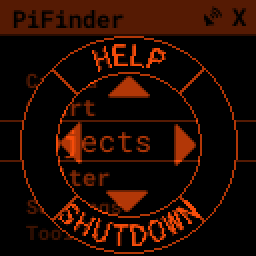
The Radial menu presents four options you can access quickly using the arrow keys. The UP arrow will normally select HELP.
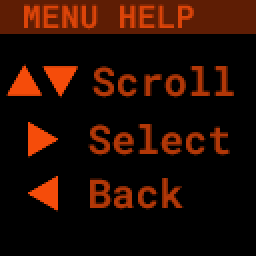
You can read through all the help for a particular screen by using the UP and DOWN arrows.
The PiFinder has a lot of powerful features, but they are all available from this menu system and are designed to use this same basic set of buttons to move around.
Configuration Setup
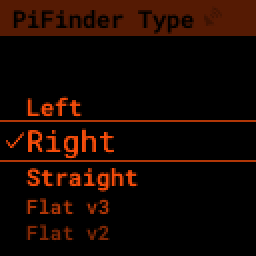
The PiFinder is available in multiple configurations (Right/Left/Straight/Flat). You’ll need to set the correct configuration in the software so the PiFinder can provide appropriate pointing directions for your specific set up.
Use the menu to select Settings from the main menu and then scroll down and select PiFinder Type
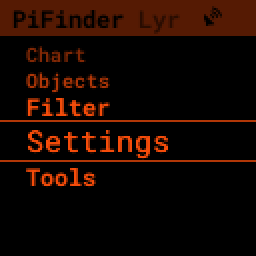
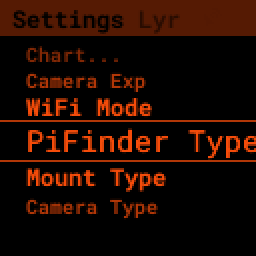
Scroll to highlight the type of PiFinder you are using and press RIGHT to make your selection. This will restart the PiFinder software.
Mounting
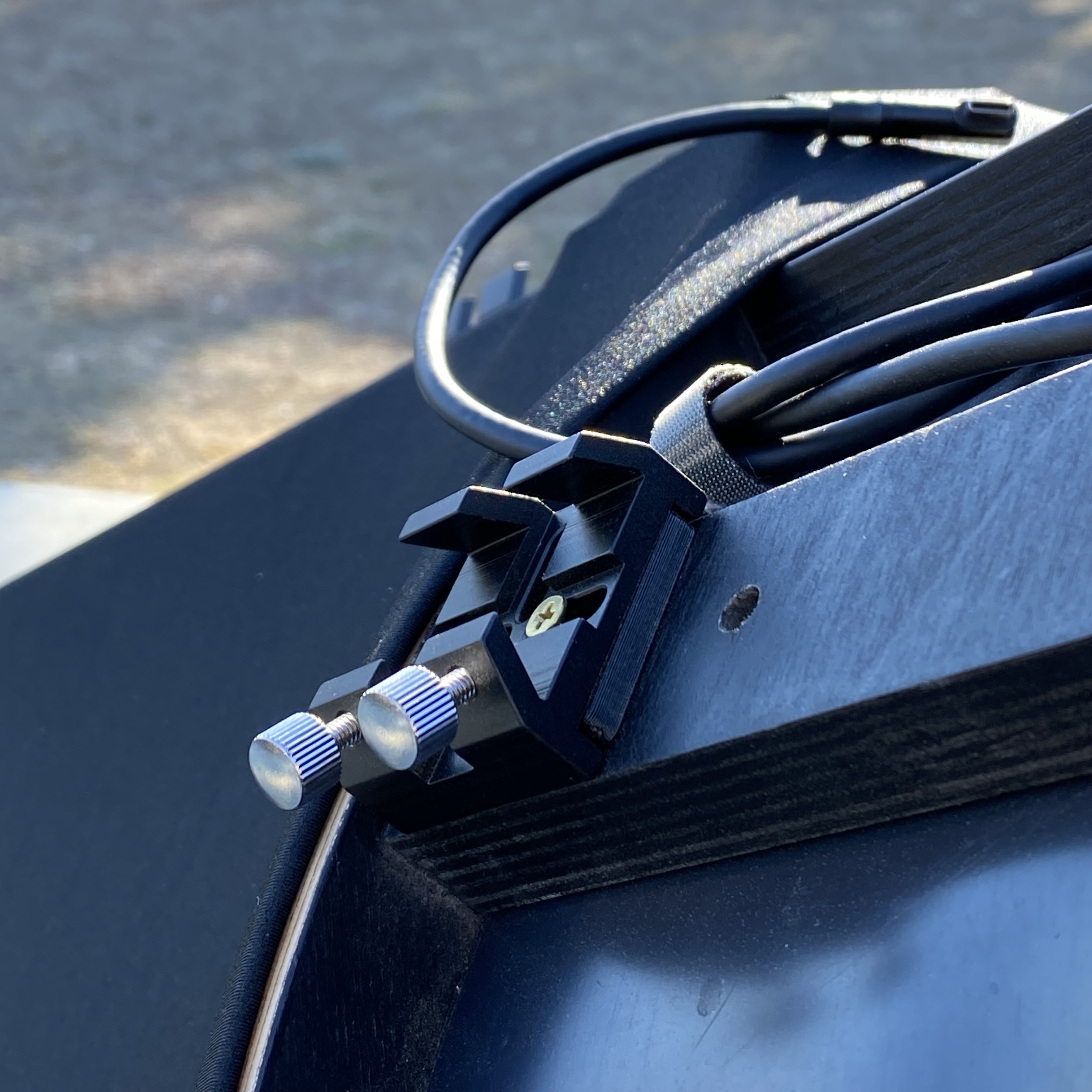
The PiFinder comes set up for a dovetail for mounting, which is 32mm wide and fits the standard finder shoe found on most scopes. Here’s an image of the finder shoe and a version 1 PiFinder mounted in it. Current PiFinders attach to your scope in just the same way.
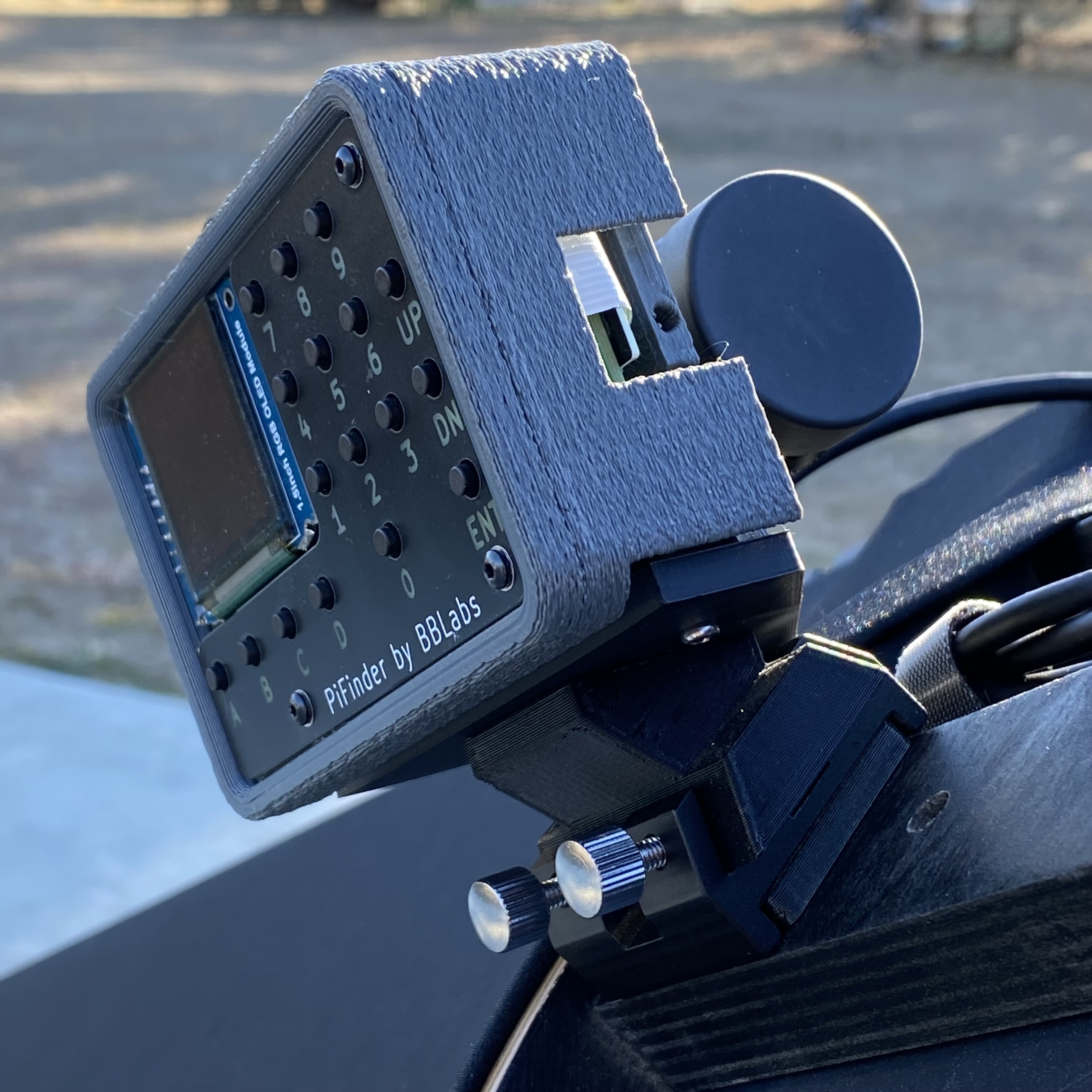
The PiFinder must be mounted in a way that is close to perpendicular to the ground, otherwise it will not be as accurate when estimating position while moving. The beauty of the PiFinder is that it always knows where it’s looking in the sky and it is programmed to assume it is perpendicular to the earth, so it will give you instructions based on that assumption.
The dovetail that comes with the PiFinder is adjustable to allow the PiFinder to sit upright, even if your finder shoe is not right at the top of your optical tube. Loosen the two screws in the dovetail, put the PiFinder on your scope and adjust the angle until it’s roughly perpendicular to the ground. Once you’re happy, remove the PiFinder and tighten the two adjustment screws. You should be all set for a night of observing!
Note
Make sure to mount the PiFinder in such a way that the camera has an unimpeded view of the sky.
There are different versions of the PiFinder for left, right, straight and flat mounting and the software needs to be configured properly for each. Check the ‘Configuration Setup’ section above to see how to adjust this.
First Time Out
Once your PiFinder is charged and your mount is set on your scope, you’re ready to head out to your observing site! Set up your scope, mount your PiFinder, and read on…
You’ll be able to turn on your PiFinder and start using it as soon as you see multiple stars in the part of the sky where the PiFinder is pointed. PiFinder uses the stars (and its internal GPS sensor) to learn where it is and what it’s looking at, so it needs a few stars in order to get started. This may happen a little after sunset, or, if you’re in an area with light pollution, you may have to wait until full darkness.
There are two icons in the upper right of the screen that will tell you if the PiFinder knows where it is: one shows a sattelite dish which will be solid when there is a GPS signal and a location has been acquired, and will flash when searching for a location and time.
The other indicator shows how the PiFinder has determined your current telescope poition. It will display a camera if it has plate-solved its current view and this camera icon will fade if the scope is moving and it’s using the acceleromiter. If you see an ‘X’, the PiFinder has yet to determine where it’s pointing (see Setting Focus & First Solve)
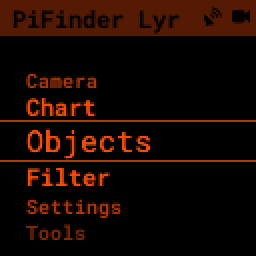
GPS Location + Camera Solve Ready to go! |
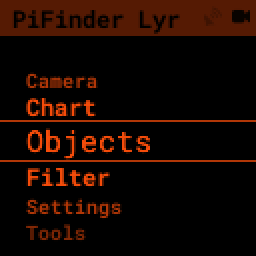
No GPS - Will be flashing Wait a bit…. |
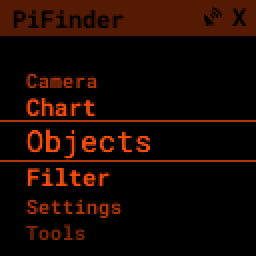
No plate solve yet Check focus if it’s dark |
Note
The GPS reciever in the PiFinder must be outside to get a GPS lock and may take several minutes to recieve all the data required to calculate it’s location and date/time.
This delay is longer after the PiFinder has been off for a long period or moved a distance while it’s turned off. Subsequent start ups at the same location should be quicker.
Adjusting Brightness
The PiFinder is designed to allow you to adjust the brightness of the screen and keypad at any time: simply hold down the SQUARE button and push + for brighter, or - for dimmer. In a dark sky site, you can turn the brightness down to preserve your dark-adapted vision.
Note
The PiFinder will dim the screen and reduce the frequency of exposures, solving, and other processes when it’s been idle for a period of time. This helps save battery power and can also prevent glare at the eyepiece in especially dark environments. The default is 30 seconds and this can be configured, or turned off completely, in the Settings Menu
Pressing any button, or moving the PFinder will wake it from power save mode.
Setting Focus & First Solve
Once you see stars populating the sky, turn on your PiFinder and aim your scope at one of the brightest best stars you can see. Make sure your lens cap is off, and immediately PiFinder will get to work solving what it sees…. the focus point of the lens is set when your PiFinder is assembled, but it may need some adjustment to see the dimmest stars.
Screw the lens in and out in the holder to adjust focus if needed.
Use the menu system to select the ‘Camera’ option
The camera screen shows a live preview of what the camera is seeing. It uses special image processing to highlight stars and remove background skyglow so that you can easily focus and align your PiFinder camera.
If there are no stars visible or the image is too defocuses he screen may seem too bright or dark or have a noisy appearance, this is normal until the camera is near focus. See below for some examples
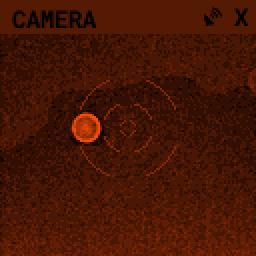
Unfocused star with bright background |
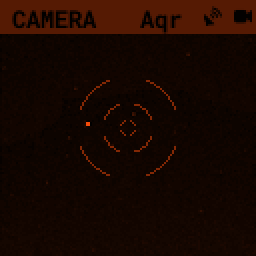
Tightly focused star with darkened background |
Try to pan your scope until you see some bright object in the camera view. You can screw the lens in and out to adjust focus. Once something star-like is in the FOV and near focus, the image processing in the preview screen will work properly and start dimming the background and highlighting the stars.
Focus is not critical, it just needs to be close. If the sky is dark enough and you’ve got focus correct, you should see the camera icon appear in the top right and the current constellation will be shown in the title bar. Congratulations, the PiFinder knows where it is pointing!
Note
Can’t get a plate solve? Check to make sure your lens cap is off, the PiFinder is not moving and the lens is properly focused. Still not working? Make sure nothing is impeding PiFinder’s view of the sky, and its lens has not dewed or fogged over.
Alignment
In order to get the most out of PiFinder, you must align it with your telescope. Even the smallest change in how your PiFinder sits in its mount as you setup your scope from night to night can change where it aims, so our first step will be to get a bright star in the center of your eyepiece. This will be used to tell the PiFinder what part of the sky your telescope is seeing. Any star you can identify with the naked eye will work.
Use the menu system to choose the Camera option if you are not already seeing the live preview and you should be able to see your chosen star in the PiFinder’s screen.
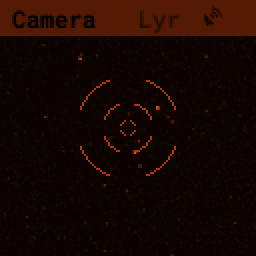
Next, press SQUARE to enter ALIGN mode. PiFinder will identify up to three bright stars in the field of view, and give each a number from 1-3.
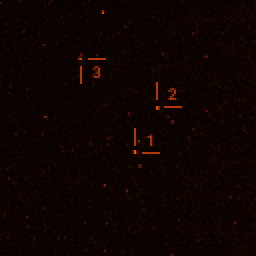
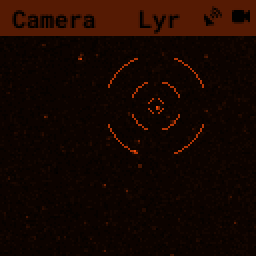
Choose the number that represents the star currently in your telescope’s eyepiece, and press that number on PiFinder’s number pad. You will be taken back to the CAMERA screen, and now the reticle will be centered on your chosen star. In the example below the 2 button was pressed and you can see the Reticle is now centered on that star. You are now aligned, and ready to explore the universe!
Note
Can’t find your star on the ALIGN screen? The PiFinder camera field of view is 10 degrees, which is about 20 full moons wide. If the star you are looking at with your telescope is not in this field, check the physical alignment of your finder shoe to make sure it’s roughly parallel to your telescopes optical tube.
Find Your First Object
Now that you’re aligned, it’s time to explore! We’ll walk you through the steps to select an object to find, get some information about it, and push your scope so it’s in the eyepiece.
Hold the LEFT arrow button for more than a second to jump to the main menu if you are not already there
Select Objects from the menu
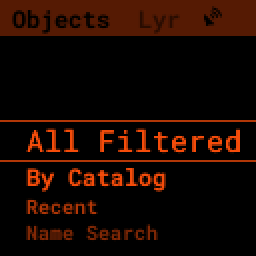
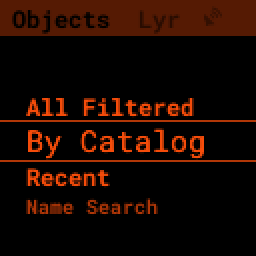
Scroll down to find the By Catalog option to browse objects by catalog
Select the Messier catalog from the menu
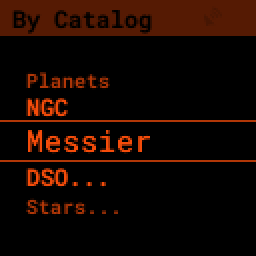
After selecting the Messier catalog you’ll see the heart of the PiFinder observing system, the Objects List! In this case the Objects List is showing all the objects that match your filters from the Messier catalog.
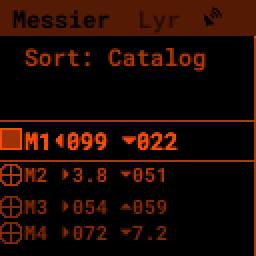
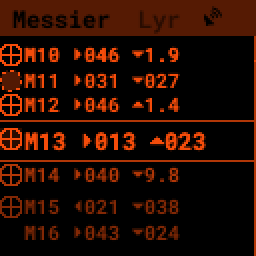
Press the SQUARE key to cycle through the different information to display about each object: Locate, Names, or Magnitude/Size
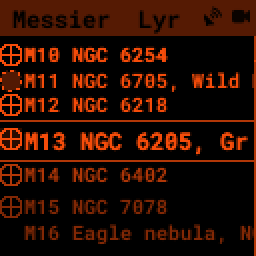
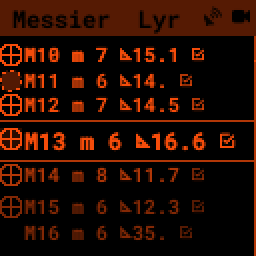
Use the UP and DN keys to browse objects and select one you want to view
Press the RIGHT arrow key to access Object Details, including Push-To guidance
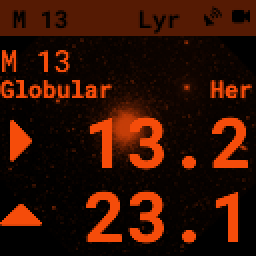
Object Details will show Push-To instructions by default, but you can use the SQUARE key to see an image of any object or catalog details.
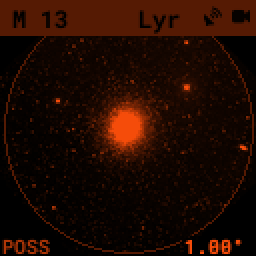
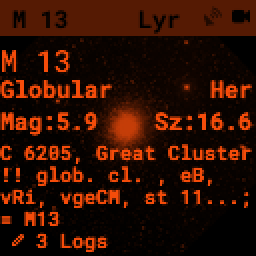
Now it’s time to point your scope at the selected object!
Press the SQUARE to cycle through the object information until you see the Push-To instructions
The Push-To instructions show how many degress to move your scope on each axis in order to find the current object. The top arrow and number tell you which direction to spin your scope clockwise vs. counterclockwise, and how far in degrees. The lower arrow tells you whether to move your scope up towards zenith, or down towards the horizon, and how far in degrees.
While watching the numbers, move your scope and the numbers should change to indicate how much closer or further you are from the object. When you get the numbers near zero, the object should be in your eyepiece!
Note
How close you need to get to 0.00/0.00 depends on your eyepiece. If you have an eyepiece with a true field of view of 1/2 degree, then a readout below 0.25/0.25 will assure the object is somewhere in your eyepiece FOV
When moving your scope the PiFinder uses it’s accelerometer to estimate where your telescope is pointing. This is less accurate than a plate solve, so the numbers displayed dim slightly to signal this. As soon as your stop moving the telescope, the PiFinder will take a new image of the sky and determine exactly where your scope is pointing. The numbers displayed will shift a bit and become brighter indicating a 100% reliable position.
Shutting down the PiFinder
Although shutting down is not strictly needed before power-off, the PiFinder is a computer and there is a chance of file corruption if you do not. Some MicroSD cards are more sensitive to this than others.
To easily shut down the PiFinder:
Hold the LEFT arrow button for more than a second to jump to the main menu
Hold the SQUARE button to access the Radial menu
Press DOWN to select the SHUTDOWN option
Use the RIGHT arrow to confirm, or the LEFT arrow to go back
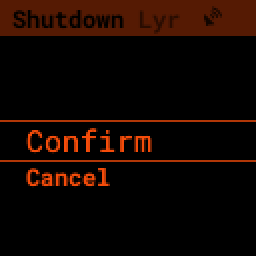
When you confrim the screen and keypad will turn off after a few seconds and it’s then safe to turn off the unit using the power switch or unplugging the battery.
You’ve now got the basics of using the PiFinder sorted, to learn more you can continue on to the full PiFinder™ User Manual